
We've been here before

In less than three weeks, federal immigration officers1 have killed two American citizens in one American city. Mere hours after the second victim, 37-year-old legal observer Alex Jeffrey Pretti, was pronounced dead, the president’s Homeland Security adviser smeared Pretti as a “would-be assassin” and “domestic terrorist,” presumably because Pretti had a gun, which he was not brandishing and which he was legally permitted to own and carry. This is a country whose leaders ostensibly pride themselves on their citizens’ right to bear arms, a right so inalienable American children have died for it time and time again. There are videos of the shooting from several angles. The footage is chaotic and at times blurry, but even then it’s difficult to imagine any legal rationale for shooting a man at point-blank range and continuing to fire after he lies lifeless on the ground.
We are paying for this in both money and blood. Fifteen days after ICE agent Jonathan Ross killed Renee Good in her car, calling her a “fucking bitch” after pulling the trigger, the House voted to fund the Department of Homeland Security through the next fiscal year. The funding package passed by the narrowest of margins: 220 to 207, with seven Democrats defecting from their party to support it. After the vote, Republican aides reportedly brought bottles of Champagne into a room off the House floor. There is no way to disentangle their celebration from these murders.
Pretti’s killing comes one day after thousands of Minnesotans took to the streets in protest of the federal occupation of their cities, the ongoing arrests of their immigrant neighbors—and of citizens perceived as immigrants due to the color of their skin—and the killing of Renee Good, whom the community is still mourning. The protest coincided with a general strike, the first such US action in nearly a century.
DHS’s boots-on-the-ground efforts are made possible by a surveillance dragnet that tracks citizens and noncitizens alike. The deportation machine feeds on data, and the people who supply the government with ways of obtaining, processing, and manipulating that data have become very wealthy at our expense. The day before Good’s murder, Palantir cofounder Joe Lonsdale said the company was established “to save Western Civilization from our adversaries, especially communists and Islamists.”
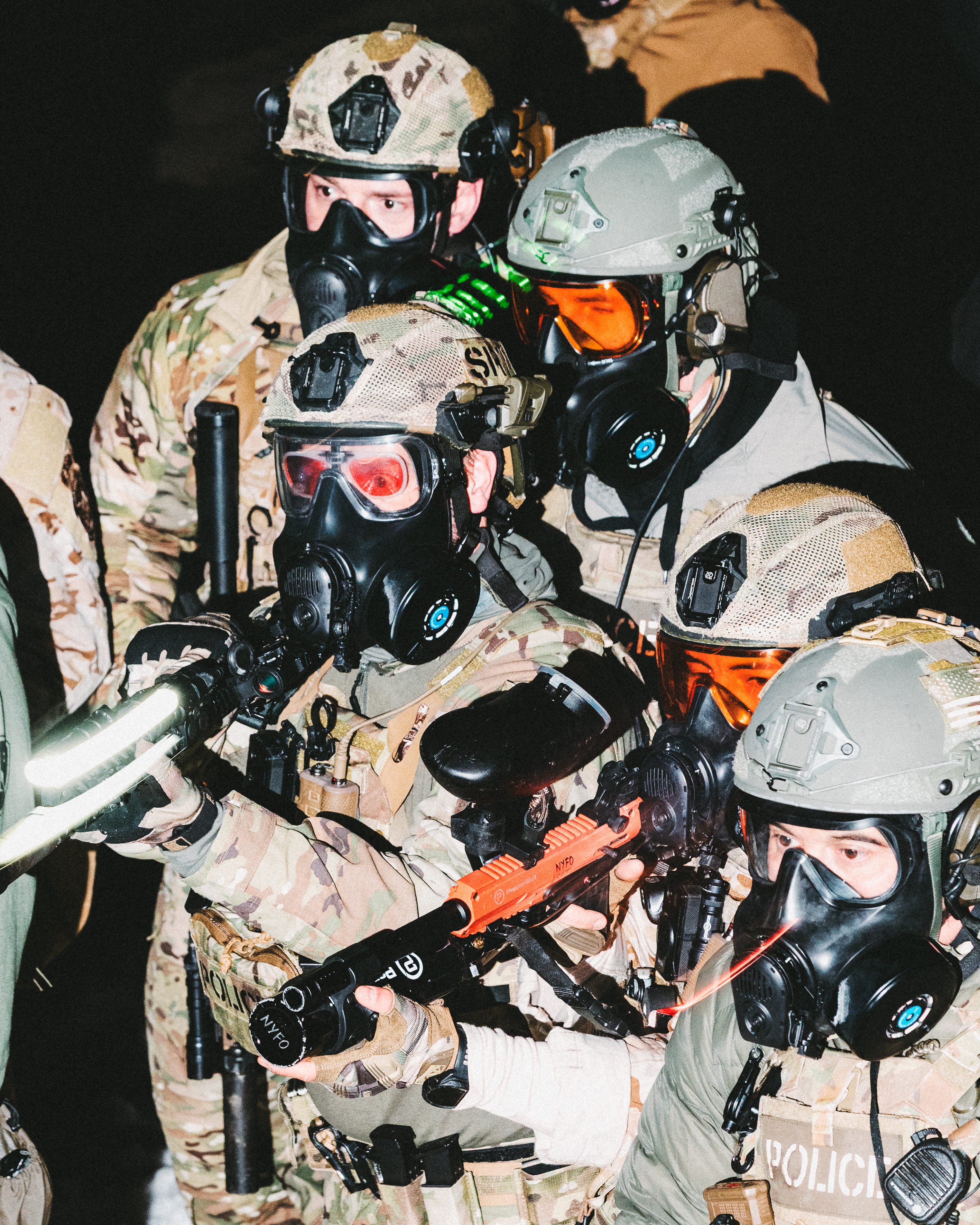
In Minneapolis as elsewhere, the tools used against foreign enemies of the state have been turned inward: as a federal agent took down a legal observer’s license plate number, he told her that DHS has a “nice little database, and now you’re considered a domestic terrorist.” What appear to be random or spontaneous kidnappings of noncitizens are in fact the product of days or weeks of stalking: ICE identifies a target, figures out their routine, and snatches them at their most defenseless. (This, of course, does not preclude more haphazard “collateral arrests.) To any bystander, the arrest of Tufts grad student Rümeysa Öztürk’s must have looked like an abduction. Masked plainclothes agents grabbed her off the street with no explanation and whisked her away to a detention facility in Louisiana, more than a thousand miles away.
Thanks to internal State Department documents released as part of an ongoing lawsuit against the government, we now have confirmation of what anyone with a brain knew to be true at the time of Öztürk’s arrest: she was detained for writing an op-ed calling on her university to divest from companies with ties to Israel. To build its case against Öztürk, ICE’s Homeland Security Investigations Office of Intelligence relied on a dossier put together by Canary Mission, an ultra-Zionist organization that has tracked pro-Palestinian student protests for over a decade. After Trump’s inauguration, both Canary Mission and a similar group, Betar US, claimed to be furnishing lists of student dissidents to the government in the hopes that they’d be arrested and deported.
What we’re seeing now is neither unprecedented nor inevitable. In 1919, on the anniversary of the Bolshevik Revolution, federal agents conducted violent raids in a dozen cities. With the help of local police, they arrested hundreds of people under the auspices of the Sedition Act of 1918, which criminalized many forms of dissent in the wake of the US entry into World War I. The years leading up to America’s involvement in the war were marred by an escalation in nationalist fervor, anti-immigrant violence, and anti-radical paranoia—much of it stoked by groups like the American Defense Society, whose members had lobbied for the Sedition Act. University professors were fired for opposing the war; teachers were publicly shamed for refusing to pledge their loyalty to the military; German immigrants were lynched; pacifists were arrested for distributing anti-war literature. Many of those swept up in the 1919 raids were members of the Union of Russian Workers, and many—but not all—were immigrants.
That December, the government deported 249 people, most of them URW members or unaffiliated anarchists, to Russia. The most famous passengers on the so-called Red Ark were Emma Goldman and Alexander Berkman, who, in a farewell message written at Ellis Island on the eve of their deportation, quoted Ralph Waldo Emerson’s “Politics”:
IT will never make any difference to a hero what the laws are.
For what avail the plow or sail
Or land or life, if freedom fail?
THE wise know that foolish legislation is a rope of sand which perishes in the twisting.
OUR distrust is very expensive. The money we spend for courts and prisons is very ill laid out.
EVERY actual State is corrupt. Good men must not obey the laws too well. What satire on government can equal the severity of censure conveyed in the word politics which now for ages has signified cunning, intimating that the State is a trick?
No law can be sacred to me but that of my nature. Good and bad are but names very readily transferable to that or this; the only right is what is after my constitution, the only wrong what is against it. A man is to carry himself in the presence of all opposition, as if everything were titular and ephemeral but him. I am ashamed to think how easily we capitulate to badges and names, to large societies and dead institutions.
The morning of the ship’s departure, relatives and sympathizers stormed the Barge Office at Ellis Island, demanding the detainees’ release.2 In a sermon a few days earlier, Reverend Percy Stickney Grant, rector of the Church of the Ascension, compared the prisoners aboard the Buford to the Mayflower pilgrims; the Buford deportations occurred on the 299th anniversary of the Mayflower’s departure. That Christmas, the League for the Amnesty for Political Prisoners organized a silent march up Fifth Avenue to protest the Buford deportations. Bystanders berated and assaulted the protesters, who sought refuge in Grant’s church. The New York Times denounced “our native radicals,” incredulous that Americans would mobilize in support of immigrant “murderers” and “bomb-throwers.”
A century later, things have changed and they haven’t. Then as now, Americans put their bodies on the line to defend their neighbors. Public opposition to the demonization of immigrants has never been stronger than it is today; neither has the state’s ability to surveil and repress dissidents. What happens next is anyone’s guess. But it’s not out of our control.
It’s unclear whether he was with ICE or CBP, both of which have been dispatched to Minneapolis
I first read about the parallels between the Mayflower and the Buford in Christine Arnold-Lourie’s “Baby Pilgrims, Sturdy Forefathers, and One Hundred Percent Americansm: The Mayflower Tercentenary of 1920,” published in the Massachusetts Historical Review.
Well said.
This piece is so necessary.
I think it’s important to remember that ICE has only existed since 2003, and both Democrats and Republicans have funded the agency with over $160 billion—with the highest levels of funding under the Biden administration.